Abbey Wood Locksmith Service Team
Local locksmith team
7 Oct 2026 10 min read
If you look at most front doors in Abbey Wood — whether it is a Victorian terrace off Felixstowe Road or a newer flat near Abbey Wood station — you will usually spot two distinct locks. One sits about a third of the way up the door and operates with a small, sprung latch. The other is set deeper into the timber, lower down, and needs a proper turn of a key to throw a solid bolt. These two locks have different jobs, different security ratings, and different implications for your home insurance. Understanding what each one does is the first step to knowing whether your front door is as secure as it should be.
This guide covers what a mortice lock is, how a nightlatch works alongside it, and when you genuinely need both — written by the team at Abbey Wood Locksmith, your local 24/7 mobile locksmiths serving SE2 and the surrounding area.
## What Is a Mortice Lock, and Why Does It Live Inside the Door?
[7] A mortice lock — sometimes written as mortise lock — is a lock that is fitted into a pocket, or mortice, cut directly into the body of the door. Because the mechanism sits inside the door rather than on its surface, the lock is far harder to attack from the outside. When you turn the key, a solid rectangular bolt extends across into the door frame and the keep plate fixed to it. That bolt does not spring back on its own — it only moves when the correct key turns it, which is what makes a mortice deadlock so resistant to being pushed or shouldered open.
The number of levers inside the lock matters enormously. A 2 lever mortice lock offers a basic level of security and is fine for internal doors or low-risk outbuildings, but it will not satisfy most home insurers. A 5 lever mortice lock is the standard British insurers ask for on a main front door. Five levers means there are five individual plates inside the mechanism, each of which must be lifted to precisely the right height by the correct key before the bolt will move. Many 5 lever mortice locks carry the BS3621 kitemark, which is the benchmark most insurers recognise when they specify a deadlock on their policy documents. If your insurer has asked for a BS3621 lock and your door currently only has a 2 lever mortice lock, that is a gap worth closing before you need to make a claim.
## How Is a Nightlatch Different from a Mortice Lock?
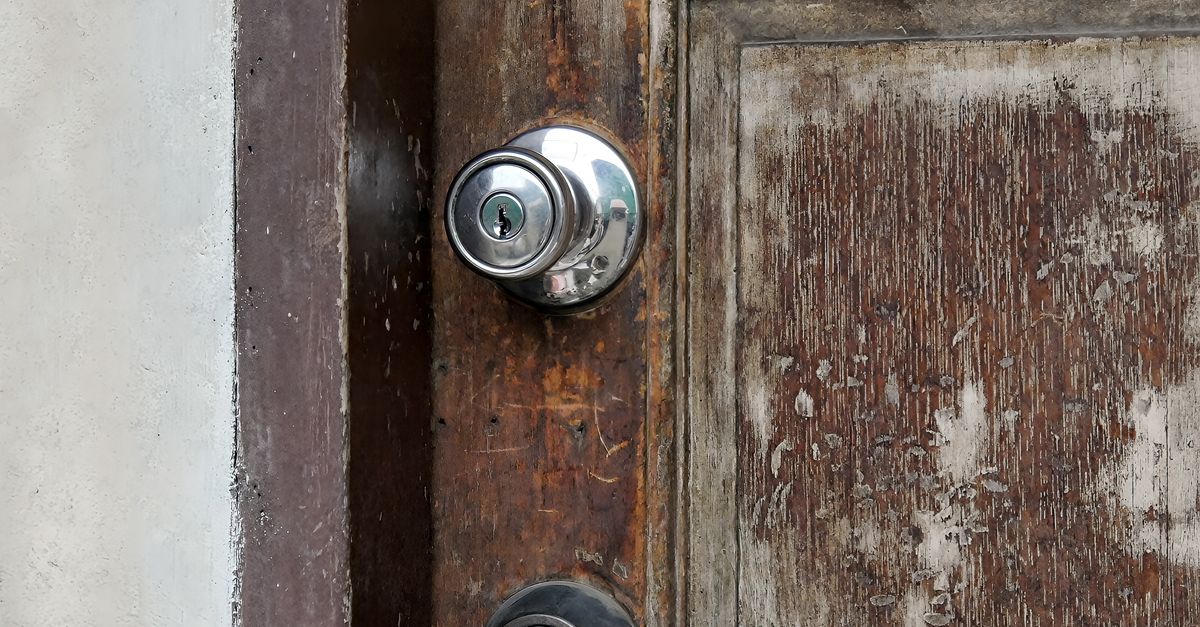
A nightlatch — most often called a Yale lock in everyday conversation, though Yale is simply one brand — is a rim lock. It sits on the surface of the door rather than inside it, which is why you will sometimes hear the term rim cylinder used to describe its barrel. The latch bolt is spring-loaded and angled, so the door clicks shut automatically when you close it. That self-latching action is convenient, but it also means a nightlatch on its own is not classified as a deadlock. The bolt can, in some older or cheaper versions, be slipped back with a credit card or similar tool — which is precisely why a nightlatch is almost never enough security on its own.
The cylinder on a nightlatch is the round barrel you see from the outside, and it is the part that takes the key. On uPVC and composite doors the equivalent component is a euro cylinder sitting inside a multipoint lock — a different system altogether, but one that presents its own risks if the cylinder is not anti-snap rated. For a traditional timber front door, the nightlatch handles the day-to-day convenience of pulling the door shut behind you, while the mortice deadlock provides the structural security that keeps the door genuinely locked. The two work as a pair, and most insurers expect both to be present and in good working order.
## When You Need Both — and What Happens When One Fails
The most common scenario our team attends in Abbey Wood is a front door where one of the two locks has stopped working — often the mortice, because over time the bolt can become stiff, the keep plate can shift in the frame, or the lever mechanism simply wears out. When that happens, homeowners often continue using only the nightlatch and assume the door is locked. It is latched, but it is not locked in the sense your insurer means. The other frequent callout is a snapped or seized nightlatch cylinder, which leaves the door either stuck open or stuck shut depending on the position of the latch when it failed.
If you are locked out of your home in Abbey Wood or anywhere across SE London, the first sensible steps are always to check whether a trusted neighbour or family member holds a spare key, and to see whether a back door or window has been left accessible by you. Never attempt to force or bypass the lock yourself — beyond the risk of personal injury, you can cause significant damage to the door frame that makes the eventual repair more involved. If those options are exhausted, calling a professional locksmith is the right move. Our team can be with you in roughly 30 minutes and will confirm an exact up-front price before any work begins — no surprises on the invoice. Call 020 3757 6072 any time, day or night.
## Lock Change London: Knowing When to Replace Rather Than Repair
Not every lock problem needs a full replacement, but there are situations where a lock change is clearly the better decision. If you have moved into a new property in Abbey Wood — whether a house on Knee Hill or a flat near Harrow Manorway — you have no way of knowing how many copies of the old key are out in the world. Changing the lock or the cylinder is straightforward and gives you clean ownership of every key from day one. The same logic applies after a break-in, after losing a key, or after a relationship breakdown where a former partner held a set.
Door lock replacement London is also the right call when a lock is simply past its useful life. Older 2 lever mortice locks on Victorian-era timber doors were often the best available at the time the house was built, but they offer a fraction of the resistance of a modern 5 lever BS3621 mortice deadlock. Upgrading is a relatively modest job for a skilled locksmith and can be the difference between a valid insurance claim and a declined one. For uPVC and composite doors, upvc door lock repair London is a regular part of our work — whether that means adjusting a multipoint lock that is no longer engaging all its hooks and bolts, or fitting an anti-snap TS007 3-star cylinder to replace one that is vulnerable to the snapping attack that has become more common across South East London.
## Choosing the Right Lock for Your Front Door in Abbey Wood
The correct lock depends on the type of door you have. Solid timber doors — still common in the older housing stock around Wilton Road and throughout SE2 — are well suited to a 5 lever mortice deadlock paired with a good-quality nightlatch. uPVC and composite doors use a multipoint locking system operated by lifting the handle and turning the key, with a euro cylinder doing the work of the barrel. For those doors, the cylinder grade matters far more than the number of levers, and fitting an anti-snap, anti-pick, anti-drill cylinder rated to TS007 3-star is the most effective single upgrade you can make.
If you are unsure what you currently have, or if your door is not closing and locking as smoothly as it should, that is a good reason to have a professional take a look. Our 24 hour locksmith London service covers Abbey Wood and the wider SE London area around the clock, including evenings, weekends and bank holidays. We carry a range of quality cylinders and mortice locks on the van, so in most cases we can carry out a door lock replacement London on the same visit without a return trip. To get an honest assessment and an exact up-front quote, call 020 3757 6072 — we answer every call, any hour.
## A Note on Security Ratings and Insurance
Home insurers vary in their wording, but the overwhelming majority of policies covering properties in Abbey Wood and across London require the front door to have a five lever deadlock that meets BS3621. If your policy says that and your door does not have it, you may find a burglary claim is complicated or refused. The same applies to nightlatches — a rim lock that cannot be double-locked from the outside (meaning the latch can still be opened from the inside without a key) does not meet the standard of a deadlocking nightlatch that insurers tend to require alongside a mortice deadlock.
It is worth pulling out your policy documents and reading the security requirements section before something goes wrong. If you find you are not meeting the specified standard, our team can advise on the most practical upgrade path for your specific door. The factors that affect the final cost include the type and grade of lock required, the condition of the existing door and frame, any parts needed, and the time of day — all of which we confirm clearly before starting any work.
Frequently asked questions
What is a mortice lock and do I need one on my front door?+
A mortice lock is a lock fitted into a pocket cut inside the door, with a solid bolt that only moves when the correct key is turned. For a main front door on a timber-framed house, yes — most home insurance policies in the UK require a 5 lever mortice deadlock that meets BS3621. Without one, you may find your policy does not pay out in the event of a break-in. If you are unsure whether your current lock meets that standard, give us a call on 020 3757 6072 and we can assess it.
What is the difference between a rim lock and a mortice lock?+
[8] A rim lock (such as a nightlatch or Yale-style lock) is fitted onto the surface of the door. It uses a spring-loaded latch that clicks shut automatically when the door closes, operated by a rim cylinder from the outside. A mortice lock sits inside the door in a cut-out pocket and uses a solid deadlock that must be deliberately turned with a key. Both serve different purposes — the nightlatch handles everyday convenience and the mortice provides the structural deadlocking your insurer specifies. On most UK front doors, both are present and both matter.
Can I upgrade from a 2 lever to a 5 lever mortice lock without replacing the whole door?+
In most cases, yes. A skilled locksmith can cut a new, deeper mortice pocket in the door and fit a 5 lever lock in place of a 2 lever one, as long as the door timber is in reasonable condition and thick enough to accommodate the larger case. The door frame keep plate will also need to be replaced with one appropriate for the new lock. It is a job that can usually be completed in a single visit. The final cost depends on the lock specified, the condition of the door and frame, and any additional parts required — all confirmed up front before work begins.
My nightlatch has stopped working but my mortice lock is fine — is my door still secure overnight?+
If your 5 lever mortice deadlock is in good working order and you are throwing it every night, your door is deadlocked and structurally secure even without a functioning nightlatch. However, a faulty nightlatch still needs attention — it may mean the door is not latching shut properly, which creates a draught and a risk of the door blowing open. It can also mean you are leaving for work each morning without the door being fully secured if you rely on the nightlatch to self-latch behind you. We can repair or replace a nightlatch quickly — call 020 3757 6072 and we will send someone straight out.